Meg Hunt Artist Residency Program
// At the Wrangell Mountains Center //
Applications for Summer 2027 DUE Jan. 17th.
Glaciers out the door, shared community meals, and studio time off the grid. The Wrangell Mountains Center exists to connect people with wildlands through art and science at our rustic, community-centered campus in McCarthy, Alaska, in the heart of Wrangell–St. Elias, the nation’s largest national park. Our residency best suits visual artists, performers, and writers who want to engage with our community and connect with the natural and human history of this remote place.
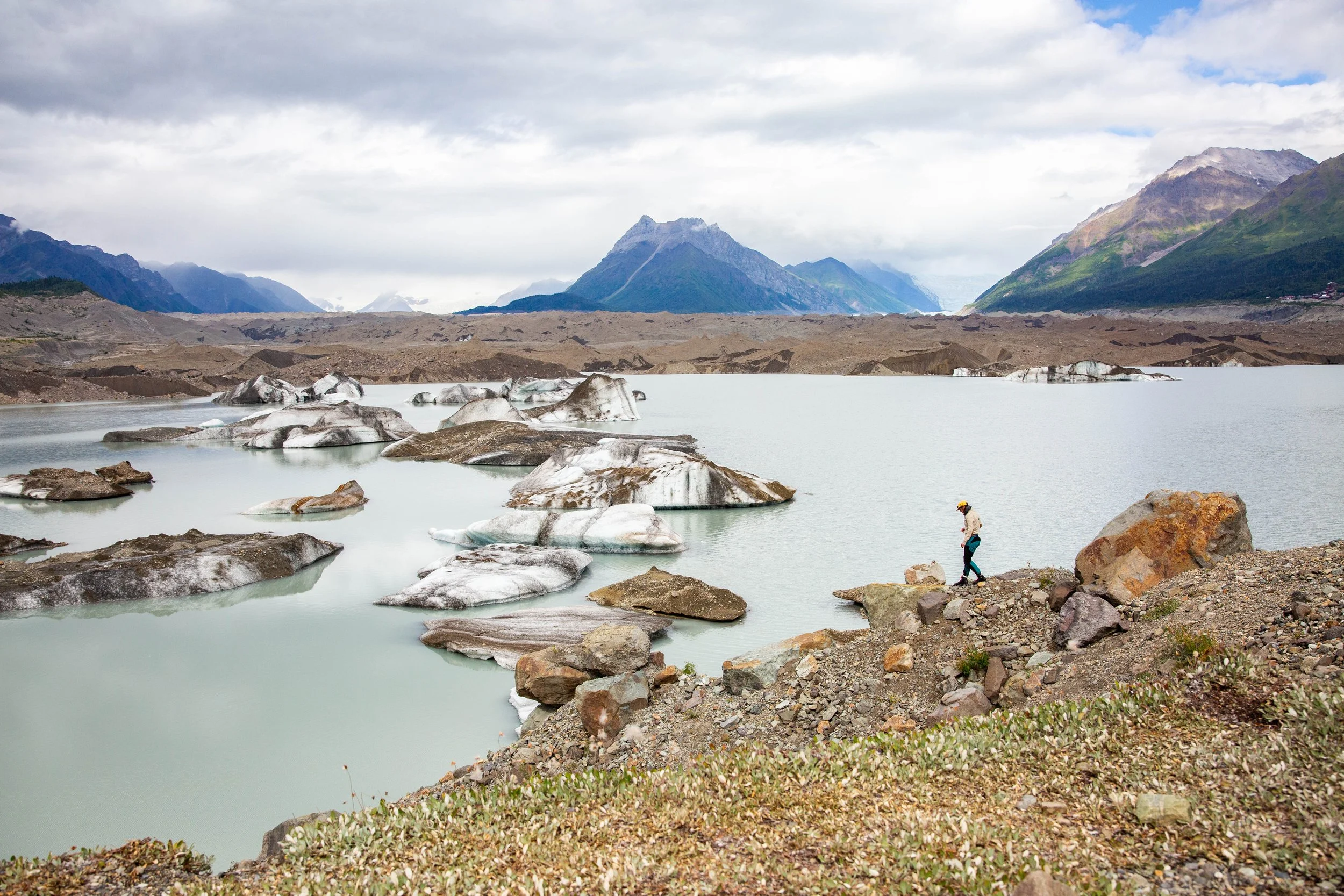
Artist Sarah Gilman contemplates the glacial lake at the terminus of the Kennicott Glacier - a casual 35 minute walk from our campus. Photo by Bronwyn Huddleson.
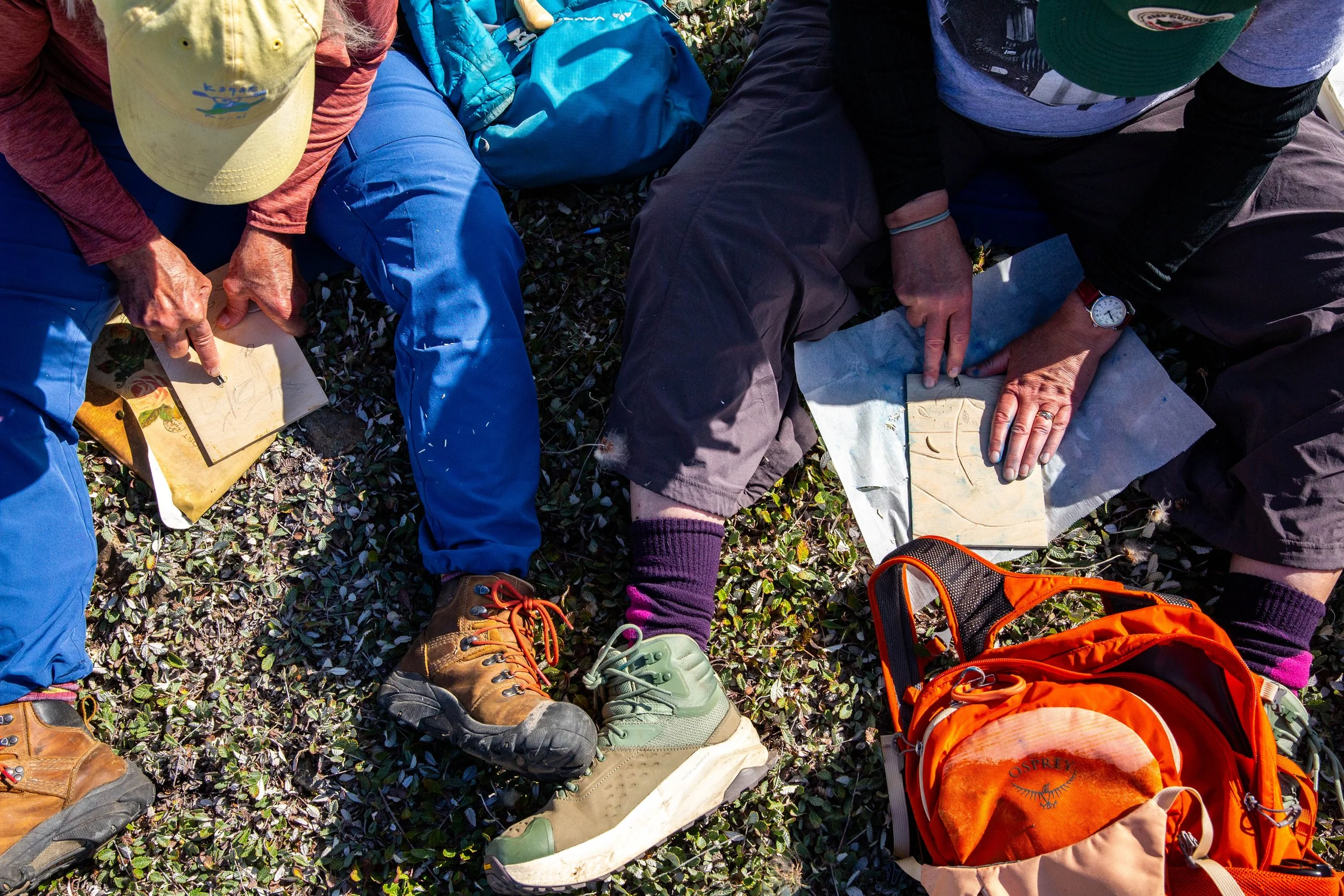
Wood Block carving in Wrangell St. Elias National Park. Photo by Bronwyn Huddleson.
Residency Program Overview
At a Glance
Free Residency Cohort: 2 artists, 3 weeks, (start date likely mid-June, exact dates TBD), 2027
Self-Funded Residency Cohorts: 6–8 artists in cohorts of 1–2, flexible stays of 2–6 weeks between May 25 and September 5, 2027, at a subsidized rate of approximately $100/day, with reduced daily rates for longer stays.
Provided for all residencies: private cabin, studio space, and shared meals/kitchen access
Not provided for any residents: travel to and from Anchorage, Alaska, or a stipend
Deadline: January 17, 2027, 11:59 pm Alaska Time (see above button to apply.)
Free Residency at the WMC
Two artists will be selected for a free three-week residency, beginning in mid-June 2027 (exact dates TBD). The WMC provides small private cabins, meals, and a simple workspace, and can help coordinate transportation between Anchorage and McCarthy (often by carpool). Residents are responsible for their own travel to and from Anchorage. No stipend is available at this time.
As part of the residency, artists are expected to share their experience with the public through a demonstration, talk, reading, performance, workshop, or other program, developed with WMC staff based on the artist's interests, medium, and experience. Our Field Studies students will be on campus during part of the residency. Artists are invited to engage with this experiential, interdisciplinary college-level field program and to share their work with the students as they see fit.
Self-funded Residency at the WMC
In addition to the two free spots, we will host 6–8 artists throughout the summer at a subsidized rate of approximately $100/day, with reduced rates for longer stays. This daily rate covers lodging, studio space, and meals/kitchen access. At-Cost residents choose their own dates between May 25 and September 5, 2027, for stays of 2–6 weeks, and are welcome to take part in any WMC programming happening during their stay. At-Cost residents are responsible for their own travel all the way to McCarthy and back.
Applicants can indicate interest in the At-Cost Residency on their application, or opt out of being considered for it, and the first batch of invitations will be sent by March 1, 2027. Our jury will offer the two free spots to the top two applicants, and At-Cost spots to the next 6–8.
At-Cost residents are not required to do a community program, but are welcome to create one with our programming manager during their stay if our schedule allows and the resident wants to engage in this way.
The Experience
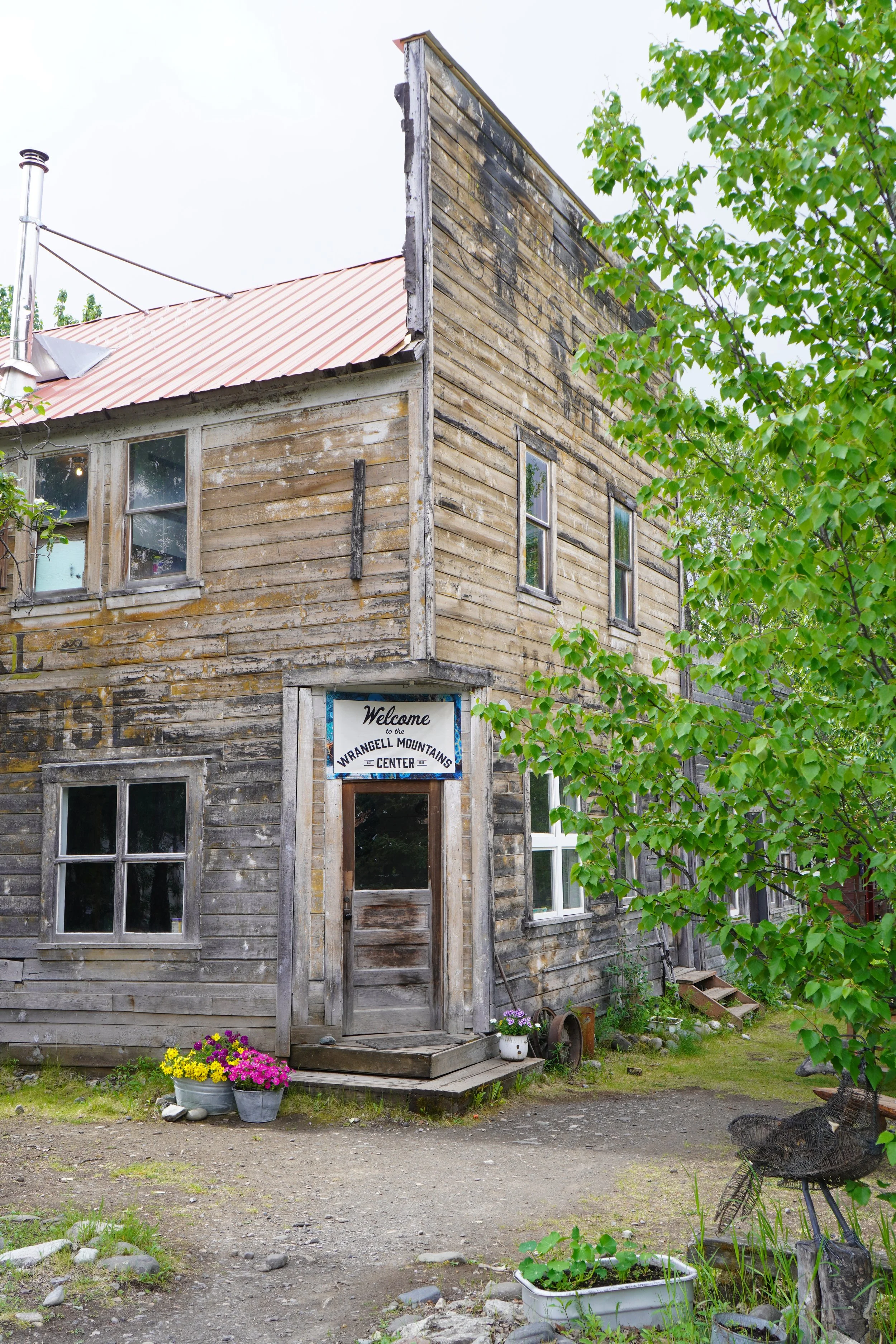
The Old Hardware Store, the center of our campus in downtown McCarthy and location of our community meals and art studios.
This residency uniquely combines rugged Alaskan small-town life, off-the-grid living, and access to one of the most dynamic natural landscapes in North America. With ice-capped mountains, the roaring Kennicott River and McCarthy Creek, and the raw terminus of the Kennicott and Root Glaciers on our doorstep, the area is an outdoor laboratory for ecology, glaciology, and geology. Because the WMC is located in downtown McCarthy, residents can find solitude while also being part of our town's lively social scene. McCarthy was established during the copper mining boom of the early 20th century, and the historic sites and buildings of McCarthy and Kennicott make the area a rich cultural environment, full of character and stories. It is a great place for contemplation, creative work, and community engagement.
Facilities
Each resident is provided with a furnished tiny cabin without running water or electricity for accommodation, and a sparse but functional work space in our common building. These spaces are rustic but equipped for basic comfort, productive work, and privacy, with the opportunity for immersion in both the natural world and the human community. Residents have access to common areas on campus and a stocked kitchen, supplemented by simple, healthy, primarily vegetarian staff-prepared meals inspired by our garden and shared with WMC staff, students, and visitors. We accommodate dietary restrictions and allergies to the best of our ability.
Our remote location limits access to goods and services. A small community market carries a limited selection of fresh food, dry goods, and camping gear. Please bring all the research materials and art supplies you need, since they are not available locally, and let us know about any specific needs in advance. Limited Wi-Fi is available (but not reliable!), and device charging depends on our solar power.
McCarthy is a welcoming, beautiful place without urban amenities. Staff provide a campus orientation covering our basic outdoor showers, drinking water, wood stove heat, outhouses (no flush toilets), and solar energy. Please note that there are many mosquitoes in McCarthy in summer. If a strong aversion to mosquitoes would make your stay unenjoyable, this may not be the right residency for you. Contact us in advance with any questions.
Location
The WMC is located in downtown McCarthy, approximately 300 miles east of Anchorage, at the end of a 60-mile dirt road in the middle of the nation's largest national park. While the 2020 census shows 107 year-round residents, the summer population grows to a few hundred. McCarthy has no electrical grid, and vehicle traffic is limited because the only access to town is a private vehicle bridge and a public footbridge across the Kennicott River. Summer highs can reach the 70s–80s°F, but cool, rainy stretches are common, so pack layers.
Locals and supporters often spend time at the WMC throughout the summer and are great resources on the human and natural history of the area. Flightseeing with a local air service is one of the best ways to see the park's massive glaciers, jagged peaks, and roadless wilderness. The National Park Service continues to restore historic mining-era buildings in Kennicott and offers interpretive exhibits and ranger programs on local history. Hikes from McCarthy and Kennicott lead onto glaciers, up high mountain passes, and to the remains of the original copper mines. Wrangell-St. Elias is unlike any national park in the lower 48.
Our Campus
The WMC campus is listed on the National Register of Historic Places. It centers on the Old Hardware Store, built in 1911 as the town's general mercantile and abandoned in 1938 when the Kennicott copper mines closed. In the 1980s, the building was converted into an active center for experiential learning. The campus also includes Porphyry Place, an adjacent homestead property that houses programming and models off-the-grid technologies and practices. Residents will have studio space in the Old Hardware Store. They will have the opportunity to experience and contribute to this sustainable living system.
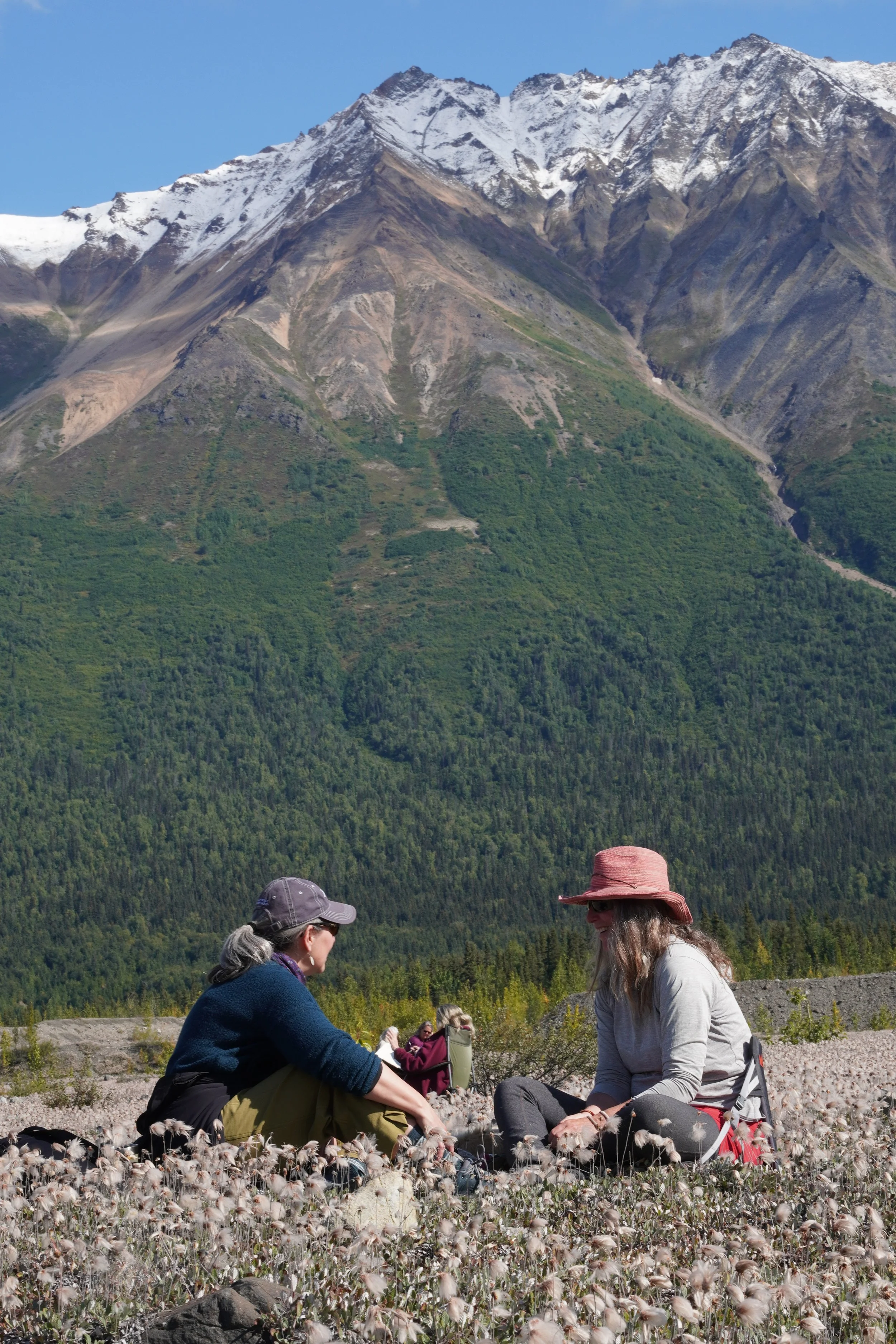
Our residency program exists to create connections between artists, our local community, and the Wrangell mountains.
Artists of all disciplines and career stages, who are interested in engaging with our interdisciplinary educational community are welcome to apply; Alaska Native and underrepresented artists are especially encouraged.
Sound like the right fit for you? Read about the application requirements and APPLY HERE:
2026 Meg Hunt Artists in Residence
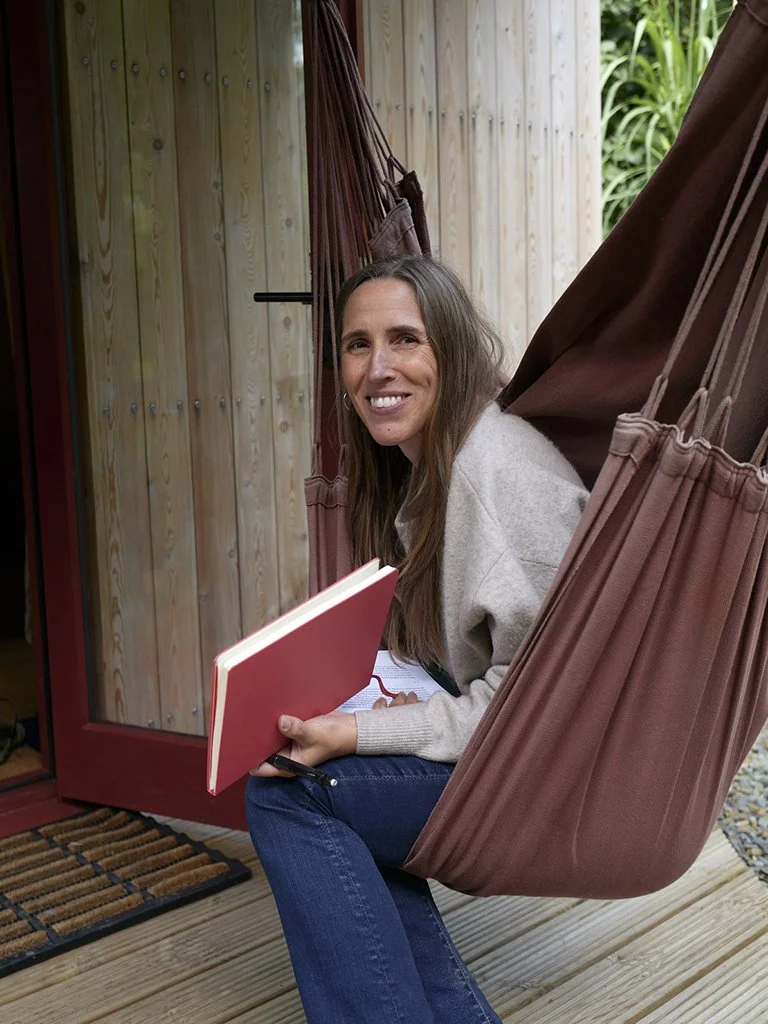
Jill Mueller
Jill Mueller is an artist and writer preoccupied with a single question: how do we make meaning of our experience — within our bodies and the natural world we inhabit, and through the threads that connect us to each other and to something larger than ourselves. Through visual art, creative writing and archival research, Jill explores the stories that bodies carry — her own, others’, a landscape’s — seeking creative perspectives that shift how we see the world and ourselves.
Her current project revisits the 1954 rescue of an injured mountaineer on Denali co-led by her grandfather, exploring the voice of the landscape itself as a living character in the story.
Alongside her studio practice, Jill gives talks and leads workshops at the intersection of art, health and lived experience. She holds an MA in Art and Science from Central St Martins, London. Most weekends you’ll find her in her garden in Southeast London, self-building an art studio out of hempcrete and timber. www.jillmueller.com | Instagram: @jillmariemueller
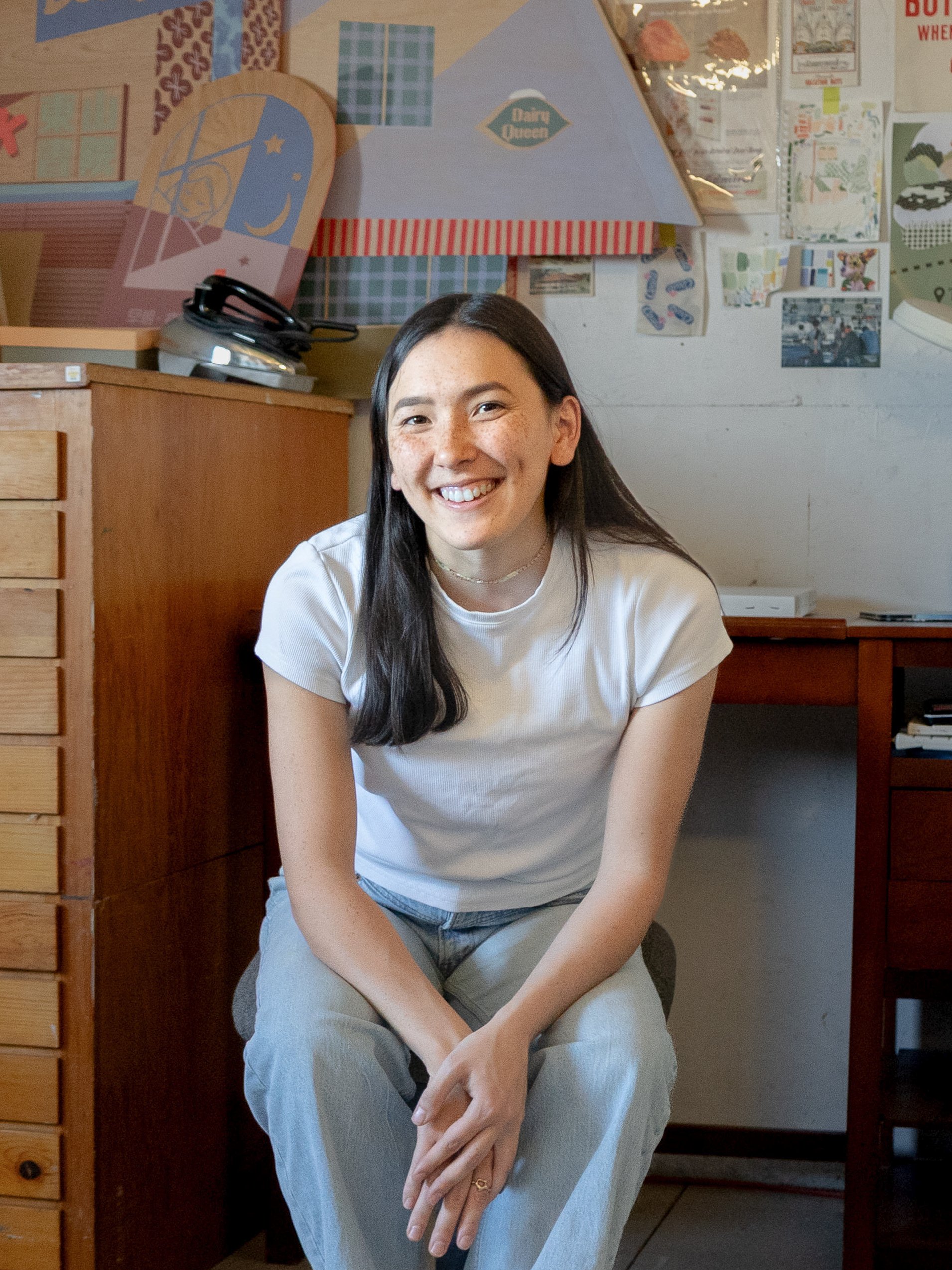
Yuki Coyle
Yuki Coyle is a visual artist working in painting, sculpture, and ceramics. Her work explores how cultural inheritance, with the intersection of lived experiences and place, shapes belonging. Raised by Japanese and Irish immigrant parents in North Dakota, she is intrigued by what defines a sense of home. Is it rooted in a place? An object? A community? Or one’s heritage?
Yuki is currently based in Fargo, ND, and recently completed her Master of Fine Arts at Montana State University- Bozeman. She has shown work in North Dakota, Minnesota, Montana, and in Takeo, Japan, as an artist-in-residence. In her free time, you can find Yuki hiking, traveling, or baking desserts. www.yukicoyle.com | Instagram: @coyle.art
Read about our past residents from 2014-2025


The Meg Hunt Residency Program is sponsored in part by the Alaska State Council on the Arts and the National Endowment for the Arts